Your journey of discovery through "Bamberch", as the locals affectionately call it, begins at the railway station, located to the north-east of the Market Gardeners’ District. This is one of three historic districts – the City on the Hills, the Island District and the Market Gardeners’ District – that together form the UNESCO World Heritage Site "Town of Bamberg".
Bamberg’s Market Gardeners’ District: urban agriculture and historic living culture
The Market Gardeners’ District is a living testament to Bamberg’s tradition of urban agriculture and historic living culture. Its distinctive gardeners’ and winegrowers’ houses have spacious gardens where fruit and vegetables have traditionally been grown – a practice that continues to this day. Liquorice has also been cultivated here since the Middle Ages. It is the basic ingredient used to make liquorice sweets, but the medicinal plant is also grated and sold as tea. So the people of Bamberg really are genuine sweet-talkers.
The perfect starting point for a walking tour of Bamberg
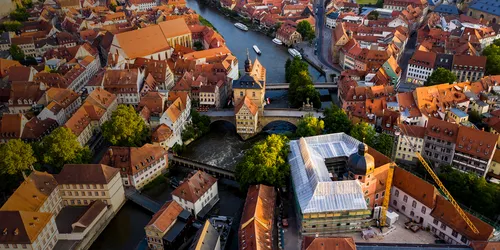
On your trip to Bamberg, stroll from the railway station along Luitpoldstraße and Obere Königstraße. Continue to Kettenbrücke bridge, which takes you into the historic Island District. As its name suggests, it lies on an island between two branches of the Regnitz river. Sometimes also known as the Citizens’ District, the area is characterised by small, independent shops and is home to the Natural History Museum and St Martin’s Church. This Catholic parish church was built in the Baroque style. Its highlights include the illusionistic dome designed by Giovanni Francesco Marchini and a Pietà dating from the beginning of the 14th century.
Bamberg sights: visiting the Old Town Hall
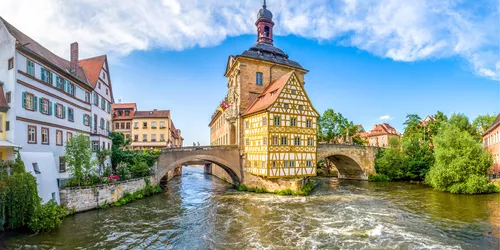
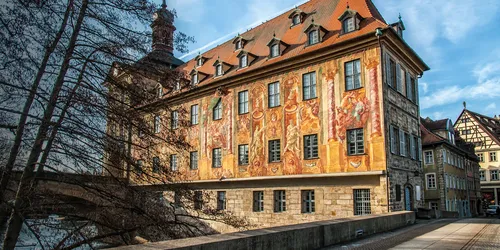
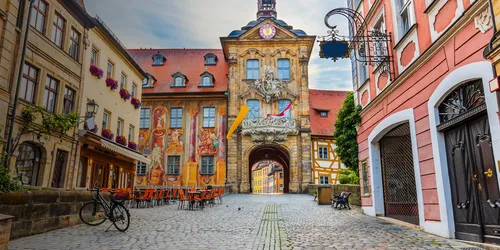
At the southern boundary between the Island District and the City on the Hills, in the middle of a branch of the Regnitz, you will encounter Bamberg’s most famous landmark: the Old Town Hall. According to legend, the bishop refused to grant Bamberg’s citizens a site for their town hall in the 15th century. They therefore drove piles into the river and constructed the impressive landmark on an artificial island. Its colourful façade, decorated with frescoes, is particularly striking. Today, the Old Town Hall houses an impressive Rococo hall and the Ludwig Collection, an extensive porcelain collection covering more than 300 years of European porcelain art. It features works from renowned manufacturers in Meissen, Vienna and Nymphenburg. The collection is named after Peter and Irene Ludwig, well-known art collectors and patrons who entrusted a significant part of their porcelain collection to the City of Bamberg.
Important information about the Old Town Hall
The Old Town Hall and the Ludwig Collection are currently closed until further notice due to ongoing renovation work. Before your trip to Bamberg, check the Museums of the City of Bamberg website for the latest information.
Bamberg’s City on the Hills: impressive historic architecture
Your trip to Bamberg continues westwards across the bridge and into the third of the city’s historic districts: the City on the Hills. Bamberg’s oldest district rises majestically above the city and is known for its magnificent medieval structures and impressive ensemble of churches, monasteries and manor houses.
The whole of Bamberg’s Old Town – comprising the City on the Hills, the Island District and the Market Gardeners’ District – was designated a UNESCO World Heritage Site in 1993. The World Heritage Visitor Centre provides a clear overview of its history and special features. To reach the Visitor Centre from the Old Town Hall, head south across Geyerswörthplatz and cross the Regnitz again via Untere Mühlbrücke bridge. Extra tip for the perfect photo: Geyerswörthsteg, directly next to the bridge, offers an excellent view of the Old Town Hall.
Here is another culinary tip: After visiting the Old Town Hall, plan a stop at Café Hörnla at Lugbank 8 and try the traditional "Bamberger Hörnla". These buttery crescent-shaped pastries have been baked in the imperial and episcopal city of Bamberg for centuries – and nobody in Bamberg would ever dream of calling them "croissants".
Bamberg Cathedral: the heart of the UNESCO World Heritage Site
Continue along Karolinenstraße into the centre of the City on the Hills until you reach Cathedral Square, which brings together architectural styles from many different periods. Here stands the heart of the World Heritage Site, the four-towered Bamberg Imperial Cathedral of St Peter and St George. Completed and consecrated in the 13th century, this architectural jewel impresses with its striking combination of Romanesque and Gothic features.
The Bamberg Horseman: a mysterious medieval sculpture
Inside the cathedral stands one of the best-known sculptures of the Middle Ages: the Bamberg Horseman. This mysterious work of art, whose precise origins and meaning remain unknown, is considered the oldest surviving lifelike medieval equestrian sculpture carved from stone. Take a moment to catch your breath, let the magnificent building work its magic and examine the iconic horseman more closely. Directly next to the cathedral is the Old Court, a complex of buildings that once served as the residence of Bamberg’s bishops.
Bamberg’s breweries and Franconian specialities
If you are starting to feel hungry and would like to enjoy authentic Franconian food, you will be spoilt for choice in Bamberg. There are still eleven active breweries within the city itself, including Klosterbräu directly beside the river and Schlenkerla in the well-known Sandstraße, with its picturesque medieval half-timbered houses. Alongside Franconian classics, both brewery restaurants serve Bamberg’s famous – and sometimes divisive – smoked beer, which is certainly worth a try. This dark, bottom-fermented Märzen beer has a distinctive smoky flavour created by smoking the brewing malt. Traditionally, it is enjoyed from a "Seidla", a half-litre glass or beer mug.
Franconian cuisine has developed a character all of its own in Bamberg. Traditional dishes include the "Bamberger Zwiebel" – an onion filled with minced meat and served in beer sauce – as well as the well-known Franconian bratwursts.
Relax in the rose garden of the New Residence
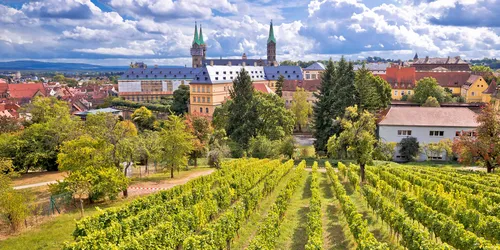
After a hearty Franconian meal, a short walk through the beautiful rose garden of the New Residence is just what you need. With around 4,500 roses, impressive sandstone figures and sweeping views across the city, the rose garden of the New Residence is an idyllic retreat above Bamberg.
Return to Bamberg railway station with views of Little Venice
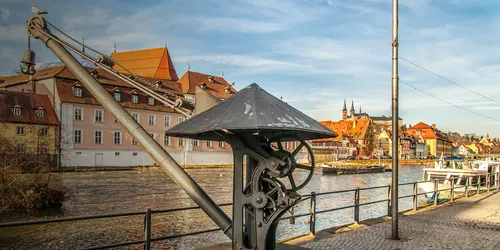
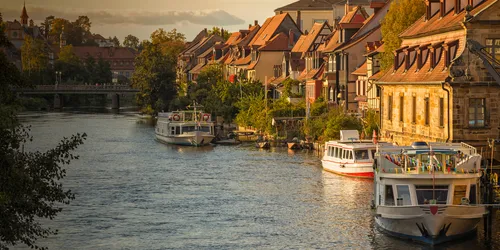
It is now time to start thinking about your journey home. For the walk back to the railway station, head from the New Residence along Kasernstraße to the banks of the Regnitz and then continue north-west towards Markusbrücke bridge. From here, you have a wonderful view of the row of houses known as Little Venice, the former fishermen’s district in Bamberg’s Island District. Its fishermen’s and boatmen’s houses are not the only reminders of the Italian lagoon city. The Venetian atmosphere is enhanced by genuine Venetian gondolas, steered by Bamberg’s own gondoliers. It is a beautiful sight and the perfect way to bring the day slowly to a close.
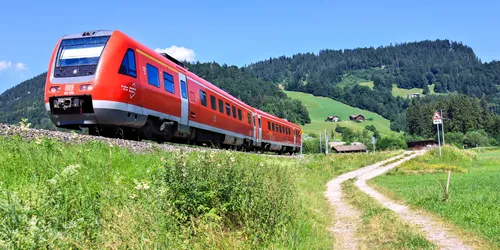
No matter how often you visit "Bamberch", every trip to Bamberg reveals a new side of the city. Magnificent architecture, charming surroundings and hearty cuisine – all just a train ride away.
Experience Bamberg with audio and video
The DB Regio Bayern "Audio Guides" take you on an interactive tour of Bamberg. Listen in and get inspired!
Join Simon as he explores Bamberg with DB Regio Bayern and the Inspirator. In the video, he tries the famous Bamberger Hörnla and enjoys the charming atmosphere of "Bamberch".