Spring awakening in Bavaria: Take the train to see the blossoms
Spring in Bavaria entices visitors with a colorful natural spectacle: From purple crocus carpets in the Allgäu mountains to delicate pink magnolia trees in historic parks. And best of all, you can reach all these blossom hotspots in a relaxed way by train.
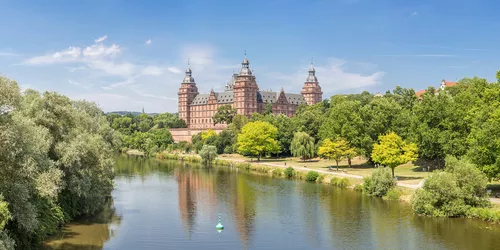
Aschaffenburg: Magnolia Fairy Tale in Schöntal Park
- Blooming period: Blossoms begin in late March to early April (duration: only a few weeks, depending on the weather)
- Special feature: Bavaria’s largest magnolia grove – the tulip magnolias create a pink-and-white sea of blossoms, fairy-tale-like against the historic backdrop.
- Accessibility: Aschaffenburg main station – approx. 15 minutes on foot to Schöntal Park/magnolia grove.
Aschaffenburg is not called the “Bavarian Nice” for nothing. Mediterranean plants and early-blooming trees thrive particularly well here. One highlight is the magnolia grove in Schöntal Park. In late March, Bavaria’s largest magnolia grove transforms the park into a pastel-pink sea of blossoms. Around 42 magnolia trees (tulip magnolias) stand close together – their delicate flowers set against the deep blue spring sky and the old park walls magically attract photographers.
The magnolia grove lies at the southern edge of Schöntal Park, just a few minutes’ walk from the old town. From Aschaffenburg main station, you stroll through the city center to the park. On the way, you pass the imposing Johannisburg Castle. Shortly afterwards, you reach the Collegiate Basilica of St. Peter and Alexander: the oldest church in Aschaffenburg dates back to the 10th century and, with its elegant tower, still shapes the cityscape today. From there, it’s only a few more steps to the park entrance.
Tip: Beneath the wide-spreading branches, you’ll always find a quiet bench to enjoy the fragrant canopy of blossoms above you. Depending on the variety, the colors range from pure white to vibrant pink; a gentle breeze lets the petals drift to the ground like confetti.
Beyond the magnolias, Aschaffenburg has even more spring to offer: in Schöntal Park itself, daffodils and tulips sprout along the pathways, and later in spring rhododendrons bloom in the neighboring castle garden.
For refreshments, the “Hofgarten” inn with its beer garden or the Italian restaurant Da Claudio are both good choices. They are located in the former orangery on the eastern side of the park. Here, you sit practically in the middle of the magnolia grove. When the last blossom closes in the evening, take a relaxed stroll back to the station. The train will carry you home comfortably.
Aschaffenburg & its sights: Bavarian Nice in Lower Franconia
Is the diversity of Aschaffenburg's excursion destinations due to its Mediterranean flair? This is...
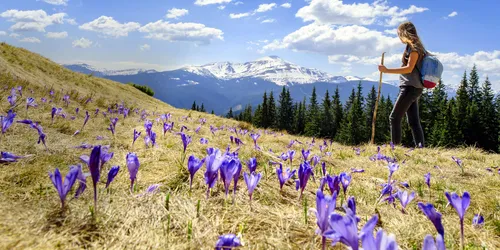
Oberstaufen (Allgäu): Crocus Bloom at Hündle
- Blooming period: Blossoms begin mid to late March and last until around mid-April
- Special feature: Over 1 million wild crocuses form a 20-hectare purple-blue carpet of flowers across the alpine meadows – unique in Bavaria!
- Accessibility: Oberstaufen station (Allgäu Railway). From there approx. 5 km to the Hündle: bus line 39 to the “Hündlebahn” stop (approx. 10 minutes), then by chairlift or on foot up the mountain.
If winter retreats from the Allgäu, the wild crocuses take center stage at the Hündle. Every spring, tens of thousands of purple and white crocus blossoms push through the ground on around 20 hectares of alpine meadow near Oberstaufen. Within just a few days, the pasture transforms into a glowing violet carpet of flowers. Because the Hündle lies at a relatively low altitude (approx. 1,100 m), the bloom often begins in late March, shortly after the last snow has melted. Until around mid-April, you can admire this burst of color before the crocuses fade again.
How to reach the crocus bloom: Take the train to Oberstaufen. From Oberstaufen station, bus line 39 brings you directly to the valley station of the Hündle cable car. For the most comfortable option, glide up to the mountain station by gondola. A marked panorama trail then leads gently uphill for about 30 minutes to the Hochsiedel-Alpe. Along the way, more and more purple-blue dots appear across the meadows until, just in front of the alpine hut, an endless crocus carpet unfolds. With views of the still snow-capped peaks of the Nagelfluh range, crocuses stretch as far as the eye can see.
For refreshments, stop by the Hündle mountain inn at the mountain station or bring a small picnic from home. Afterwards, head back to the mountain station and take the cable car down to the valley. In Oberstaufen, you can round off your spring day with a relaxed stroll through Oberstaufen Park before catching the train home.
Hin & Hören: Sportlich in Oberstaufen
Und Abfahrt! Ob Pistenzauber oder Sommerrodeln – in Oberstaufen geht es zu jeder Jahreszeit sportlich zu. Wir fahren gemeinsam in das Ski- und...
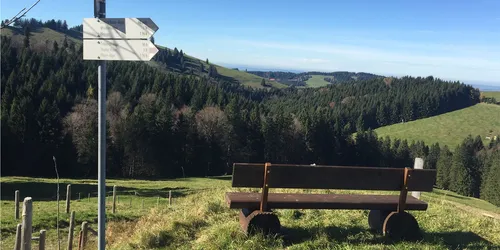
Freising: Spring Awakening in the Weihenstephan Gardens
- Blooming period: Begins in March and lasts until May – a continuous сменing display of spring flowers (crocuses, daffodils, tulips, early perennials).
- Special feature: Display and trial gardens of a horticultural university – a colorful potpourri of flowers and trees throughout the seasons. Panorama views over Freising included!
- Accessibility: Freising station. From there, a 20-minute walk (1.5 km, uphill) or city bus line 639 to the “Weihenstephaner Berg” stop, right at the gardens.
Weihenstephan is not only a name that excites beer lovers – garden enthusiasts are equally captivated. On the Weihenstephan hill in Freising, several interconnected display gardens benefit from the expertise of the local horticultural university. As soon as the snow melts, the first spring bloomers begin to sprout. In March, hundreds of crocuses and snowdrops light up the lawns. Shortly afterwards, daffodils and tulips follow. In the Weihenstephan Gardens, you experience the full diversity of plant life: trees and shrubs, perennials and annual flowers, carefully arranged and clearly labeled.
The garden complex is spacious and divided into themed areas. Right at the entrance, you’ll find the famous Perennial Trial Garden – in spring, a sea of tulips and freshly sprouting perennials. Further uphill, the Orchard Garden and the Fragrance and Aroma Garden await, delighting visitors with floral scents from April onwards. In between, you’ll discover quiet corners: a meadow lined with magnolias, a pond with irises (later in the year), and benches beneath blooming ornamental cherry trees. Speaking of cherries: in one part of the park, Japanese cherry trees blossom in April – a little hanami spot that remains largely unknown in Freising (while Munich’s cherry blossom hotspots are the Olympiapark and Westpark). Up here, you can almost enjoy a private hanami with a view.
Good to know: The Weihenstephan Gardens are open year-round and free of charge, although individual facilities or greenhouses may be temporarily closed. Current information is available on the university’s official website.
For refreshments, you don’t have to look far: right next door, the traditional Weihenstephaner Bräustüberl beer garden awaits beneath chestnut trees. A cool wheat beer and a hearty Bavarian snack round off your spring outing perfectly. Afterwards, it’s an easy walk downhill back towards Freising station.
The oldest brewery: Weihenstephan in Freising
Weihenstephan is the oldest brewery in the world still running. On a tour you can dive into the...

Würzburg: Blossoms in the Residenz courtyard garden
- Blooming period: From March, the first spring flowers such as crocuses, tulips and daffodils appear. From early to mid-April, the oriental ornamental cherry trees bloom in the southern part of the court garden for about one to two weeks.
- Special feature: Baroque garden + spring blossoms = a fairy-tale setting. Delicate spring greenery combined with colorful accents and artfully trimmed box hedges.
- Accessibility: Würzburg main station – approx. 15 minutes on foot to the Residence (1.2 km straight along Kaiserstraße). Alternatively, tram lines 1 or 4 to “Dom” or a bus to the “Residenzplatz” stop (if you prefer a shorter walk).
Würzburg is known as the “city of romance” – and in spring, the Residence truly lives up to this name. The baroque Court Garden awakens: in the western section, pasque flowers and crocuses bloom across the lawns as early as March, followed shortly by tulips and daffodils. In the northern garden, magnolias stretch their oversized blossoms towards the sky (also in April), while the adjacent Ring Park shines in fresh May green. The Residence itself is, of course, worth a visit – but on a sunny spring day, you’ll almost automatically drift outside into the gardens.
From early April, the oriental cherry blossoms in the southern parterre open and bathe the avenue in soft pastel pink. The combination of baroque architecture and a sea of blossoms is truly unique: in the morning, dewdrops sparkle on the petals and a sweet fragrance fills the air – a picture-perfect hanami experience right in the heart of Lower Franconia.
Tip: From Residenzplatz, continue strolling through the old town towards the Old Main Bridge, where you can toast to spring with a glass of Franconian wine, while high above you the Marienberg Fortress towers over the city.
Discover Würzburg: a walking tour of the city’s top sights
Discover Würzburg on a day trip by rail. Walk to the Old Main Bridge, Market Square, St Kilian’s...
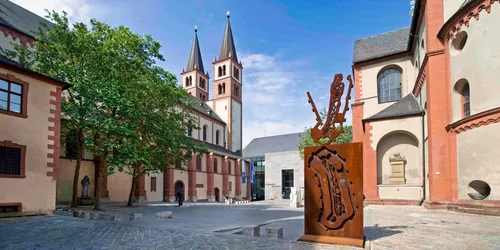
Bamberg: Magnolia dream at Schiller Square
- Blooming period: From early April (depending on the weather) – the huge magnolia at Schillerplatz in Bamberg bursts into pink blossoms (a highlight for around 7–10 days). Other magnolias in the old town (e.g. near the town hall and on Michelsberg hill) bloom at the same time.
- Special feature: Schillerplatz, in front of the Alte Hofhaltung, is home to Bamberg’s most famous magnolia – a true magnet for visitors during its bloom.
- Accessibility: Bamberg station. From there, bus line 910 to “ZOB” or “Domplatz” (approx. 5 minutes), then just a few steps to Schillerplatz. On foot, about 20–25 minutes (1.8 km) through the old town.
In Franconian Bamberg – already famous for its old town – spring brings a special natural spectacle: the magnolia blossom at Schillerplatz. Right next to the baroque university building (the former Old University), an ancient Magnolia soulangeana spreads its branches. Every April, it opens hundreds of pink-and-white blossoms. The tree is as tall as a house and completely covered in flowers – a soft cloud of petals against historic facades.
Bamberg is perfect for exploring on foot, especially in spring when splashes of color appear on every corner. In Hain Park, ornamental cherry trees and forsythia bloom, and along the Regnitz River, fresh greenery and flowerbeds line the paths. Yet it is the magnolias that steal the show. Besides the famous tree at Schillerplatz, you’ll find another striking magnolia near the Gabelmann fountain in the pedestrian zone and one in the courtyard of the Alte Hofhaltung (sometimes accessible only with a cathedral ticket). Wander through the winding lanes and you’ll keep discovering charming details: fruit trees blooming in small front gardens and, around Easter, beautifully decorated fountains. The baroque Neptun Fountain at Grüner Markt, affectionately called “Goblmoo” by locals, transforms into an Easter fountain around Palm Sunday, adorned with hundreds of colorful eggs.
From here, continue your stroll uphill to Michelsberg Monastery. Once at the top, a magnificent panoramic view over the city awaits you – and even more magnolias near the old hospital buildings.
Bamberg delights not only the eye but also the palate. In spring, the traditional beer cellars reopen. After admiring the blossoms, why not enjoy a smoked beer at Spezial-Keller, sitting beneath the chestnut trees with a sweeping view over Bamberg?
Discover Bamberg by train: a walking tour through the UNESCO World Heritage Site
Travel to Bamberg by train and explore the UNESCO-listed Old Town on foot. Discover the Market...
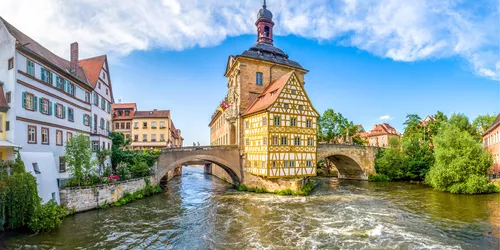
A fragrant sea of magnolias in Aschaffenburg, purple crocus fields in the Allgäu region, and delicate pink cherry blossoms in Würzburg—Bavarian spring is at its most beautiful. And best of all, you can reach all these natural wonders easily by train. So pack your backpack, don't forget your camera, and off you go! Spring is waiting!
FAQ
Wo blühen in Bayern im Frühling die Magnolien am schönsten?
Die schönsten Magnolien findest du im Park Schöntal in Aschaffenburg (größter Magnolienhain Bayerns) und in Bamberg am Schillerplatz sowie am Michelsberg.
Wann und wo blühen in Bayern die Krokusse?
Ein beeindruckendes Krokus-Blütenmeer findest du Ende März bis Mitte April rund um das Hündle bei Oberstaufen im Allgäu. Über eine Million Wildkrokusse verwandeln die Bergwiesen in einen leuchtenden Teppich.
Welche Parks oder Gärten in Bayern lohnen sich im Frühjahr besonders?
Empfehlenswert sind die Weihenstephaner Gärten in Freising (von März bis Mai) und der Hofgarten der Würzburger Residenz (Anfang/Mitte April, Kirschblüte).
Gibt es einen Geheimtipp für Frühlingsausflüge in Bayern?
Ein Geheimtipp sind die japanischen Zierkirschen in einem abgelegenen Teil der Weihenstephaner Gärten in Freising sowie die Magnolienvielfalt in Bamberg, die abseits der Hauptrouten oft wenig besucht sind.