Destination
Nuremberg New Museum: Discover contemporary art and design
Exhibitions
Culturally Important
Crafts, DIY and Courses
Program & Tours
rest stop
Art and design from the 1950s onwards meet a curved glass façade: discover the Neues Museum in Nuremberg, its collection and its changing exhibitions.
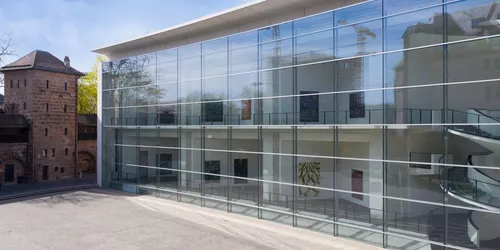
The Neues Museum in Nuremberg combines art and design from the 1950s onwards with architecture that is itself part of the museum experience. Behind the curved glass façade, we discover paintings, photographs, sculptures, installations and internationally renowned design objects. Changing exhibitions ensure that new connections are revealed with every return visit.
The Neue Museum Nuremberg at a glance
- Collection: Art and design from the 1950s to the present day
- Exhibition space: more than 3,000 square metres
- Architecture: museum building by Volker Staab with a glass façade approximately 100 metres long
- Distinctive feature: fine art and applied design are presented together
- Activities: temporary exhibitions, guided tours, workshops and digital museum guides
- Travelling by train: The museum is just a few minutes’ walk from Nuremberg Central Station.
Discover contemporary art and international design
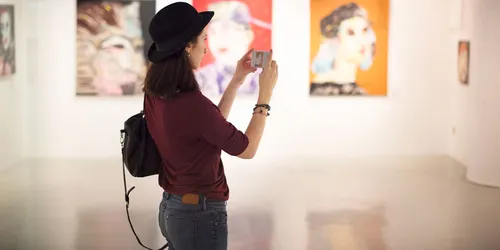
At the Neues Museum Nürnberg, fine art and applied design come face to face. Paintings, photographs and installations are displayed alongside furniture, everyday objects and other design pieces. This means the focus is not just on how something looks, but also on how design influences our everyday lives, our movements and our view of the world.
The museum showcases art and design from the 1950s to the present day. The collection displays are regularly updated and supplemented by special exhibitions. As a result, works are continually presented in new thematic contexts. Sometimes the focus is on a particular colour, sometimes on a material, a social issue or the relationship between a work of art and an everyday object.
For its design section, the Neues Museum collaborates with the Neue Sammlung – The Design Museum in Munich. Internationally renowned design objects from its extensive holdings are brought to Nuremberg. Rather than separating art and design, the museum deliberately presents both fields side by side.
The architecture of the Neues Museum Nuremberg
Even before we enter the first exhibition space, our encounter with contemporary design begins. The Berlin architect Volker Staab designed the building between 1992 and 1999. The Neues Museum opened in 2000.
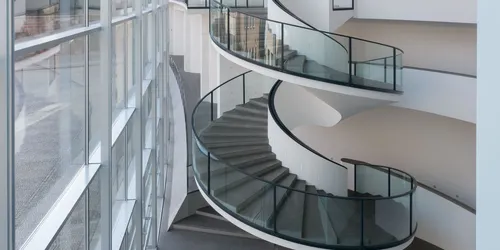
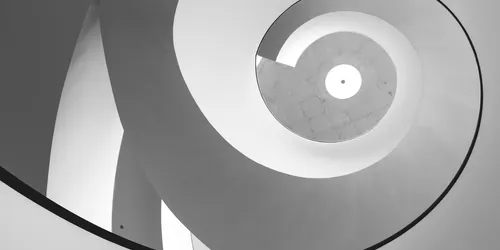
Its gently curved glass façade, some 100 metres long, follows the contours of Klarissenplatz and reflects the medieval city wall, the sky and the people passing by. As a result, the interior and exterior spaces seem to merge. Behind the glass, a striking spiral staircase winds its way through the building. Sandstone, glass and concrete echo the surroundings without obscuring the museum’s modern design language.
Inside, too, sightlines and vistas repeatedly draw the eye beyond the individual exhibition rooms. Anyone wishing to explore the architecture in more detail can use the museum’s digital architecture guide. Audio recordings, the voices of the designers and interactive features explain the ideas behind the building. There is a separate audio track for children.
Gerhard Richter at the Neues Museum in Nuremberg
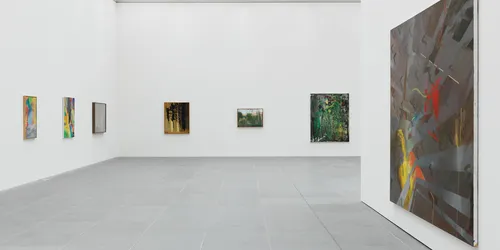
A key focus of the collection is the works of Gerhard Richter. With around 30 permanent loans from the Böckmann Collection, the Neues Museum boasts one of the largest museum collections of Richter’s work. The works range from blurred photographs and cityscapes to colour fields and large-format abstract paintings.
As the museum displays its holdings in changing combinations, not all works are on display at the same time. A digital guide helps visitors to explore Richter’s various working methods and artistic concepts. You can find out which works are currently on display by checking the exhibition programme for Gerhard Richter before your visit.
Temporary exhibitions open up new perspectives
Alongside the permanent collection, special exhibitions shape the programme. The museum focuses on individual artists, current themes and new developments in design. Sometimes bold colours and large-scale installations grab the attention; at other times, the works only reveal themselves upon closer, prolonged viewing.
The foyer, the spaces along the façade and Klarissenplatz are also regularly incorporated into the presentations. Art is therefore not confined to the traditional exhibition galleries. Some works are visible from the outside or alter the appearance of the glass façade.
As exhibitions and individual rooms may change or be temporarily refurbished, we should check before our visit which exhibitions are open on the day of our visit. The museum publishes the current programme on its website.
Guided tours and workshops for children and adults
The Neues Museum offers guided tours, art talks and hands-on workshops for different age groups. Participants not only view art and design objects but, depending on the activity, also work with paint, paper, clay or digital media themselves.
There are special tours and workshop programmes for families. Children and adults can explore individual works together, familiarise themselves with materials and bring their own ideas to life. Age requirements and conditions of participation vary depending on the event. Current dates can be found in the Neues Museum’s programme.
Visits with pushchairs are also possible. The exhibition galleries, foyer and auditorium are accessible via ramps or by lift. Different guidelines may apply to individual guided tours due to limited space.
Sculptures amongst the trees and the city wall
The museum features a small sculpture garden situated between the modern building and the historic city walls. Old trees, sandstone walls and contemporary sculptures create a tranquil contrast to the exhibition spaces. The works on display there may change in line with the museum’s exhibitions.
Right next door is the Nuremberg Crafts Centre. Its small half-timbered houses and workshops focus on traditional crafts. This makes it possible to combine contemporary design with Franconian craft traditions during a day out.
A Japanese meal at Klarissenplatz
Opposite the museum is the Japanese restaurant Kokoro. The menu features, amongst other things, sushi, soups, salads and modern interpretations of Japanese cuisine. As the restaurant closes temporarily between lunch and dinner service, it’s worth checking the current opening hours before you visit.
Those who prefer to stroll through the old town a little longer will find further cafés and restaurants around Königstraße, Lorenzkirche and Breite Gasse. Our city tour of Nuremberg’s sights offers inspiration for a longer walk.
By train to the Neues Museum Nürnberg
We take the train to Nuremberg Central Station. There, we leave the station building heading towards the Old Town and cross the station square. Passing through the Königstor, we arrive directly at the Handwerkerhof. We cross the courtyard and emerge onto Klarissenplatz on the opposite side. We can recognise the New Museum by its long glass façade.
The walk takes just a few minutes. Thanks to its central location, a visit to the museum can easily be combined with a visit to the Handwerkerhof, St Lorenz’s Church or a stroll through Nuremberg’s Old Town.
The step-free museum entrance is accessible via a small alleyway branching off Luitpoldstraße. Inside the building, ramps and lifts provide access to all the collection and exhibition rooms. Wheelchairs and walking frames can be borrowed free of charge from the museum ticket office.
FAQs
Special exhibitions
Arrival
Neues Museum – Nuremberg State Museum of Art and Design
Klarissenplatz
90402 Nuremberg
Nürnberg Hbf
Our tip: Please make sure to check your train connection and the expected capacity before you start your journey.