Yes, Nuremberg is an excellent destination for a day trip. Many famous sights, including the Handwerkerhof, St Lawrence’s Church, the Main Market Square and the Imperial Castle, are located in the Old Town and can easily be combined on foot.
Destination
Nuremberg and its sights: On a city tour through Bavaria's second largest city
highlight
Castles
Viewpoint
Historically Relevant
Exhibitions
Shopping
Food highlight
City Trip
The Franconian metropolis of Nuremberg has much more to offer than the world-famous Christkindlesmarkt. Join us on a city adventure through Bavaria's second largest city and discover Nuremberg's sights. Here, the old town, shaped by the Middle Ages, meets urban trendy districts. Discover Nuremberg by train now!
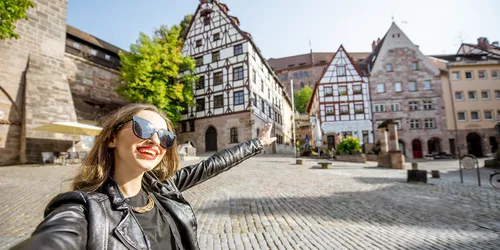
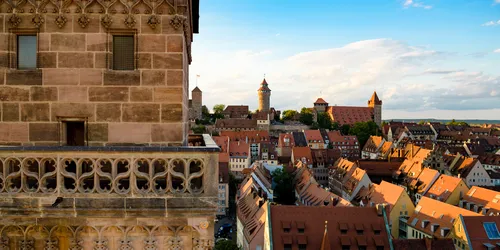
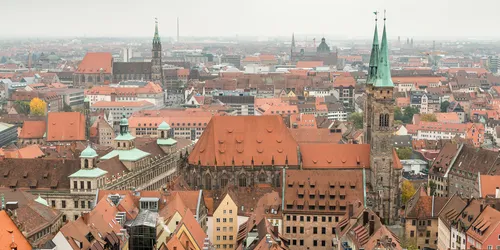
Nuremberg is a city full of history and culinary delights, but it has far more to offer than the Imperial Castle, bratwursts and Elisen gingerbread. Known as the home of Albrecht Dürer, the city has plenty of other sights waiting to be discovered. During your visit, you can admire impressive medieval architecture, magnificent churches and charming squares throughout the Old Town.
Your day trip to Nuremberg begins with a relaxed journey by rail. Nuremberg’s main railway station is easy to reach from many Bavarian cities, and your walking tour of the Old Town begins directly opposite the station.
From Nuremberg’s main railway station to the Old Town
As soon as you arrive at Nuremberg’s main railway station, your adventure begins. Directly opposite the main exit, the Frauentor Tower immediately catches your eye. The distinctive tower acquired its present form in the late 14th century and was one of the four main towers in Nuremberg’s city walls. Today, it is an ideal starting point for your tour of Nuremberg’s Old Town.
Nuremberg Handwerkerhof: crafts and Franconian specialities
Directly behind the Frauentor and beside the city walls is the picturesque Handwerkerhof, a little gem in the heart of Nuremberg. Located in the former armoury courtyard, it offers a lively insight into traditional craftsmanship and Franconian culture. Among the half-timbered houses and cobbled alleyways, you can browse small workshops and watch craftspeople blowing glass, shaping clay, working with gold or crafting leather.
Many of the handmade pieces are available to buy directly from the workshops and make attractive souvenirs of your trip to Nuremberg.
You will probably soon notice the aroma of freshly grilled bratwursts. In the heart of the Handwerkerhof is the historic Bratwurstglöcklein. Here, Nuremberg Rostbratwurst sausages from the restaurant’s own butcher shop are traditionally grilled over beechwood and served on pewter plates. Add a refreshing drink and you have the perfect setting in which to sit back and watch the activity in the courtyard.
St Lawrence’s Church: a Gothic sight in Nuremberg
From the Handwerkerhof, continue north-west along Königstraße. After approximately seven minutes, you will reach the imposing St Lawrence’s Church, one of Nuremberg’s most important churches. The Gothic building was constructed over two centuries and continues to impress visitors with its richly detailed interior. Particularly noteworthy are the famous "Angelic Salutation" by sculptor Veit Stoß, Adam Kraft’s almost 19-metre-high tabernacle and the medieval stained-glass windows.
Take your time to appreciate the elaborate altars, sculptures and windows. They tell the story of Nuremberg’s great period as a prosperous imperial city.
Museum Bridge and the Holy Spirit Hospital on the Pegnitz
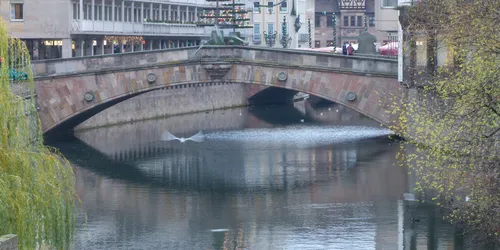
From the southern Lorenzer side of the Old Town, continue along Königstraße towards the northern Sebalder district. The two parts of the Old Town are separated by the Pegnitz, Nuremberg’s city river, which winds picturesquely through the historic centre. Cross the river via the Museum Bridge, an impressive sandstone bridge and a pleasant place to pause for a moment.
From here, you have a fine view of the Holy Spirit Hospital, an impressive 14th-century building extending across the Pegnitz. Part of the building is now used as a retirement home. On its lower level, you will find the restaurant and wine taverns of the Holy Spirit Hospital, where you can enjoy Franconian cuisine and regional wines overlooking the water.
Nuremberg’s Main Market Square and Beautiful Fountain
Walk a few steps further along Plobenhofstraße to reach the Main Market Square, the central square of Nuremberg’s Old Town. A weekly market is held here on weekdays. During Advent, the square is transformed into a sea of sparkling lights when it hosts the famous Nuremberg Christkindlesmarkt.
A particularly striking feature is the Beautiful Fountain. The colourful, gilded Gothic pyramid rises approximately 19 metres above the square. It is not only a popular photo subject but also the focus of numerous legends. Have you spotted the small brass ring in the wrought-iron fence? According to one legend, turning the golden ring makes wishes come true. Those who turn it three times are even said to be blessed with many children. Is there any truth to the story? Give it a try and make a wish.
Nuremberg specialities: bratwursts, carp and gingerbread
Nuremberg is not only historically fascinating but also a rewarding culinary destination shaped by the hearty flavours of Franconian cuisine. Be sure to try the city’s famous Nuremberg Rostbratwurst sausages. The classic way to enjoy them is as "3 im Weggla": three crisp sausages served in a crusty bread roll.
If you prefer fish, carp is a typical Franconian speciality. It is traditionally served during the months containing the letter "r", from September to April.
For a leisurely meal, visit Bratwurst Röslein on Rathausplatz, a Nuremberg institution whose tradition dates back to 1493. In addition to bratwursts, the restaurant serves carp and other Franconian dishes in a welcoming atmosphere.
Nuremberg Imperial Castle: a landmark above the Old Town
After your culinary discoveries, continue to Nuremberg’s next major attraction and the city’s defining landmark: the mighty Imperial Castle. Standing high above the Old Town, it is visible from many parts of Nuremberg and gives the city its distinctive silhouette. From the Main Market Square, walk across Rathausplatz and follow Burgstraße uphill to the castle.
On the way, you will pass St Sebald’s Church, another impressive piece of architecture that is well worth seeing.
Nuremberg Imperial Castle and its special features
Then the Imperial Castle rises before you, one of Germany’s most impressive castles. From the Middle Ages onwards, Nuremberg was an important stopping place for the kings and emperors of the Holy Roman Empire. They held court assemblies and Imperial Diets at the castle. The complex comprises the Imperial Castle in the west and the former Burgraves’ Castle in the east.
Particularly rewarding sights include the Sinwell Tower, with its sweeping panoramic views across Nuremberg, and the Deep Well, which was cut more than 50 metres into the rock. An exhibition inside the Sinwell Tower presents historic photographs of the destruction of the castle and city during the Second World War.
Another interesting detail is that the former Imperial Stables now house a modern youth hostel, offering accommodation surrounded by Nuremberg’s history. If you visit during the Blue Night, you can experience the castle from an entirely different perspective. During this cultural festival, elaborate light and art installations illuminate the historic complex.
Albrecht Dürer’s House: follow in the artist’s footsteps
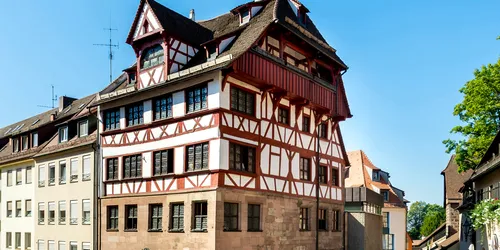
Just a five-minute walk from the Imperial Castle, down Obere Schmiedgasse, the next highlight awaits: Albrecht Dürer’s House, directly beside Tiergärtnertor. The famous artist Albrecht Dürer lived and worked here from 1509 to 1528. It is the only largely original Renaissance artist’s house to survive in Northern Europe.
In 1828, it became Germany’s first museum dedicated to an artist. Even today, its rooms allow you to immerse yourself in the atmosphere of the Renaissance.
Inside the museum, you can learn about the history of the building and Dürer’s life and work. A special feature is the guided tour led by an actress playing the role of Dürer’s wife, Agnes. The Graphic Art Cabinet presents works from the City of Nuremberg’s extensive art collections, while the printing workshop introduces visitors to historic printing techniques.
Nuremberg museums: toys, railways and cultural history
If you visit Nuremberg by rail, you can stop at several other fascinating museums on the way back to the station. After all, Nuremberg has more than 35 museums. The Toy Museum on Karlstraße is particularly rewarding. It traces the history of toys from antiquity to the present day and explains why Nuremberg was known for centuries as a city of toys.
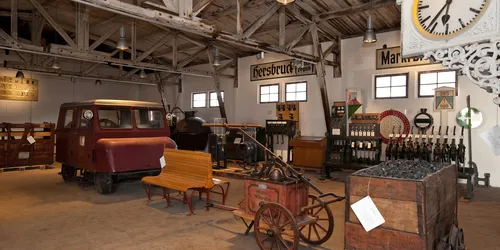
Technology enthusiasts and railway fans should visit the DB Museum at Lessingstraße 6, close to the main railway station. With restored original vehicles, varied exhibitions and interactive elements, the world’s oldest railway museum guides you through the history of rail travel. It vividly demonstrates how the railway has transformed mobility and everyday life, appealing to adults and families alike.
As you can see, Nuremberg has so much to offer that one visit is hardly enough. Fortunately, your next trip by rail is easy to plan.
Culture and shopping in Nuremberg’s Old Town
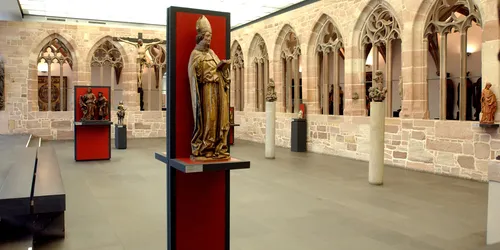
Cross the Fleischbrücke bridge to return to the southern part of the Old Town. Here, you can browse the shops along Breite Gasse and Karolinenstraße or visit the Germanisches Nationalmuseum. It is the largest museum of cultural history in the German-speaking world. Its collections span the period from prehistory and early history to the present day and include works by Albrecht Dürer and Veit Stoß.
Between the Germanisches Nationalmuseum and Nuremberg’s main railway station is another cultural highlight: the New Museum. Across more than 3,000 square metres, it presents art and design from the 1950s to the immediate present.
If you would like to discover art in a different way, you will find an unusual stop nearby at Hintere Sterngasse 9. The art vending machine dispenses small artworks, making each purchase surprising, creative and unique.
Original Nuremberg gingerbread as a souvenir
Before leaving Nuremberg, pick up a packet of Original Nuremberg gingerbread. One well-known producer is Lebkuchen-Schmidt. These aromatic specialities make a practical snack for your journey home, an attractive souvenir or simply a delicious reminder of your day trip. Nuremberg gingerbread is available throughout the year and tastes good in every season, not just in winter.
Optional detour to Nuremberg’s Gostenhof district
If you still have some time during your day trip, take a detour to the lively Gostenhof district, affectionately known as "GoHo". Located south-west of the Old Town, the neighbourhood is known for its cafés, independent vintage shops and colourful street art. Here, you can wander through the streets, discover creative corners and soak up the city’s alternative atmosphere.
A relaxing journey home by rail
As you return to the main railway station and begin your journey home by rail, take a moment to reflect on the day’s many impressions. With a packet of Original Nuremberg gingerbread in your bag and memories of impressive sights, Franconian hospitality and regional specialities, you may already be planning your next visit. One thing is certain: Nuremberg has much more waiting to be discovered.
"Adee" and until "nächsdn Mol" in Nuremberg!
FAQs
Nuremberg can be reached by rail from many cities in Bavaria, either directly or with only a few changes. Nuremberg Central Station is located right next to the Old Town, making it an ideal starting point for a walking tour.
The Old Town is only a few minutes’ walk from the central station. Pass through the Königstor gate to reach the Handwerkerhof, where you can begin your tour of Nuremberg.
Yes, the main sights in Nuremberg’s Old Town are easy to explore on foot. As the route to the Imperial Castle leads uphill and partly across cobblestones, comfortable shoes are recommended.
Nuremberg’s best-known sights include the Handwerkerhof, St Lawrence’s Church, the Main Market Square with the Beautiful Fountain, the Imperial Castle and Albrecht Dürer’s House. The historic lanes and views from the castle are also highlights of a city tour.
Allow at least half a day for a walking tour of the Old Town. A full day is worthwhile if you also want to visit the Imperial Castle, Albrecht Dürer’s House or one of the city’s major museums.
Nuremberg has a wide range of museums. Some of the best known are the Germanisches Nationalmuseum, the DB Museum, the Neues Museum and Albrecht Dürer’s House.
Nuremberg is famous for its small grilled sausages, often served three in a bread roll as “Drei im Weggla”. The city is also well known for its traditional Nuremberg gingerbread.



Arrival
Women's Gate Tower Nuremberg
Nürnberg Hbf
Our tip: Please make sure to check your train connection and the expected capacity before you start your journey.